PM Highlights Next-Gen GST Reforms for Inclusive Growth
- News|Blog|GST & Customs|
- 2 Min Read
- By Taxmann
- |
- Last Updated on 19 August, 2025
Latest from Taxmann

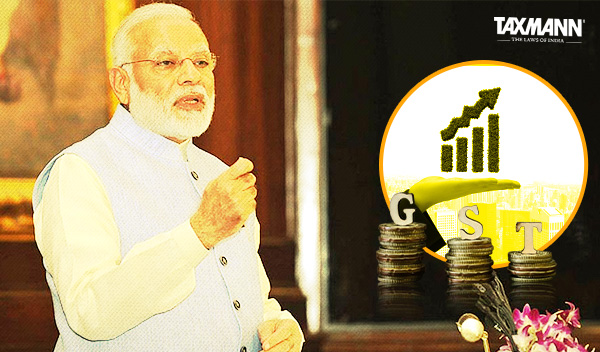
Press Release Dated 15-08-2025
Prime Minister Reaffirms GST as Landmark Reform
On the occasion of the 79th Independence Day, the Prime Minister highlighted the significance of the Goods and Services Tax (GST) as a transformative reform in India’s economic journey. He emphasized that GST has not only streamlined the indirect tax regime but also played a vital role in enhancing transparency, reducing compliance burdens, and fostering a unified market. Looking ahead, the Prime Minister outlined a roadmap for the next phase of GST reforms, with a strong focus on ensuring stability, predictability, and inclusiveness in the system.
Structural Reforms for Greater Stability
The Government’s reform agenda rests on three core areas: structural reforms, rate rationalisation, and ease of living. Under structural reforms, attention will be directed towards correcting inverted duty structures that often result in the accumulation of input tax credit (ITC). The Government also aims to address classification disputes to ensure consistency in tax treatment and to reduce avoidable litigation. Importantly, the reforms seek to provide long-term stability in tax rates, enabling businesses to plan with certainty and fostering a conducive environment for investments.
Rate Rationalisation and Consumption Boost
The rate rationalisation agenda focuses on reducing tax incidence on both essential and aspirational goods to boost affordability, demand, and overall consumption. The proposals envisage moving towards a simplified dual slab system, replacing the current complex structure. This change will ensure that tax rates are more transparent and business-friendly. Additionally, the efficient use of fiscal space, particularly after the conclusion of the compensation cess, will allow the Government to balance revenue needs with the objective of promoting economic growth and consumer welfare.
Ease of Living Through Digital and Automated Systems
The third pillar, ease of living, is centred on leveraging technology to simplify compliance and improve taxpayer experience. Key measures include seamless digital registration processes, the introduction of pre-filled returns to minimise human error, and accelerated automated refunds, particularly to support exporters and businesses impacted by inverted duty structures. These proposals have been referred to the Group of Ministers for detailed review and will subsequently be placed before the GST Council. The Centre has reaffirmed its commitment to working closely with the States under the framework of cooperative federalism to ensure timely adoption and implementation of these reforms within the current fiscal year.
Click Here To Read The Full Press Release
Disclaimer: The content/information published on the website is only for general information of the user and shall not be construed as legal advice. While the Taxmann has exercised reasonable efforts to ensure the veracity of information/content published, Taxmann shall be under no liability in any manner whatsoever for incorrect information, if any.

Taxmann Publications has a dedicated in-house Research & Editorial Team. This team consists of a team of Chartered Accountants, Company Secretaries, and Lawyers. This team works under the guidance and supervision of editor-in-chief Mr Rakesh Bhargava.
The Research and Editorial Team is responsible for developing reliable and accurate content for the readers. The team follows the six-sigma approach to achieve the benchmark of zero error in its publications and research platforms. The team ensures that the following publication guidelines are thoroughly followed while developing the content:
- The statutory material is obtained only from the authorized and reliable sources
- All the latest developments in the judicial and legislative fields are covered
- Prepare the analytical write-ups on current, controversial, and important issues to help the readers to understand the concept and its implications
- Every content published by Taxmann is complete, accurate and lucid
- All evidence-based statements are supported with proper reference to Section, Circular No., Notification No. or citations
- The golden rules of grammar, style and consistency are thoroughly followed
- Font and size that’s easy to read and remain consistent across all imprint and digital publications are applied
Everything on Tax and Corporate Laws of India
To subscribe to our weekly newsletter please log in/register on Taxmann.com








 CA | CS | CMA


