President Gives Assent to Income-tax Act, 2025
- Blog|News|Income Tax|
- 2 Min Read
- By Taxmann
- |
- Last Updated on 23 August, 2025
Latest from Taxmann

30 of 2025, dated 21-05-2025
1. Assent to the Income-tax Act, 2025
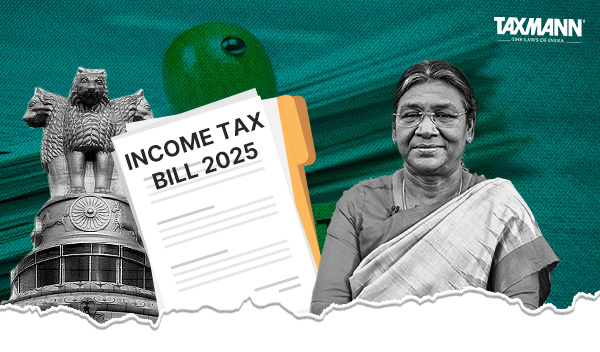
The President of India has given assent to the Income-tax Act, 2025, marking a historic development in the country’s direct tax framework. This legislation repeals and replaces the Income-tax Act, 1961, which has been in force for more than six decades. The enactment of this new law underscores the government’s objective of modernizing tax legislation to keep pace with evolving economic realities, global practices, and the growing complexity of business transactions.
2. Objective of the New Law
The Income-tax Act, 2025, has been enacted with the primary objective of consolidating and amending the law relating to income tax. By replacing the archaic provisions of the 1961 Act, the new legislation seeks to simplify compliance, reduce litigation, and provide greater clarity in interpretation of tax laws. It aims to create a more efficient and predictable tax regime, thereby fostering investor confidence and supporting the government’s broader goal of ease of doing business.
3. Date of Enforcement
The provisions of the new Act shall come into force from 1st April, 2026, and will apply in relation to the assessment year 2026-27 and onwards. This one-year window before implementation provides taxpayers, businesses, and professionals sufficient time to understand the new provisions and prepare for a smooth transition. It also allows the government and tax administration to issue necessary rules, notifications, and clarifications to ensure effective implementation of the new law.
4. Taxation Laws (Amendment) Act, 2025
Alongside the approval of the new Income-tax Act, the President has also given assent to the Taxation Laws (Amendment) Act, 2025. This legislation seeks to amend certain provisions of the Income-tax Act, 1961, which will continue to remain in force until the new law takes effect. These amendments are aimed at addressing immediate concerns, plugging gaps, and aligning the existing law with current requirements, thereby ensuring continuity and stability during the transition phase.
Click Here To Read The Full Update
Disclaimer: The content/information published on the website is only for general information of the user and shall not be construed as legal advice. While the Taxmann has exercised reasonable efforts to ensure the veracity of information/content published, Taxmann shall be under no liability in any manner whatsoever for incorrect information, if any.

Taxmann Publications has a dedicated in-house Research & Editorial Team. This team consists of a team of Chartered Accountants, Company Secretaries, and Lawyers. This team works under the guidance and supervision of editor-in-chief Mr Rakesh Bhargava.
The Research and Editorial Team is responsible for developing reliable and accurate content for the readers. The team follows the six-sigma approach to achieve the benchmark of zero error in its publications and research platforms. The team ensures that the following publication guidelines are thoroughly followed while developing the content:
- The statutory material is obtained only from the authorized and reliable sources
- All the latest developments in the judicial and legislative fields are covered
- Prepare the analytical write-ups on current, controversial, and important issues to help the readers to understand the concept and its implications
- Every content published by Taxmann is complete, accurate and lucid
- All evidence-based statements are supported with proper reference to Section, Circular No., Notification No. or citations
- The golden rules of grammar, style and consistency are thoroughly followed
- Font and size that’s easy to read and remain consistent across all imprint and digital publications are applied
Everything on Tax and Corporate Laws of India
To subscribe to our weekly newsletter please log in/register on Taxmann.com








 CA | CS | CMA


