[Opinion] Vintage Cars – Tax Treatment as Capital Asset or Personal Effect
- Blog|News|Income Tax|
- 3 Min Read
- By Taxmann
- |
- Last Updated on 3 September, 2025
Latest from Taxmann

Meenakshi Subramaniam – [2025] 178 taxmann.com 24 (Article)
One man’s fiancée was excited to hear about his vintage car. “We’ll go for a long drive, every day” she said. On the first day, the car shut down every five minutes. It made ear-breaking noises, also. This process continued every day. Finally, the fiancée threw engagement ring away and bade bye-bye. The man confided to friend:
” I lost my fiancée, but got capital gains exemption, because the judge agreed that the car was used for personal purposes.”
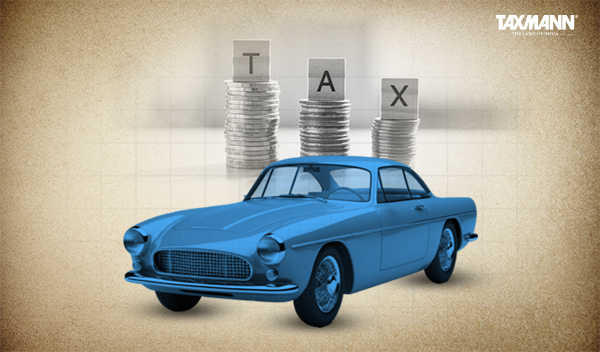
In the recent bizarre case of Narendra I. Bhuva v. Asstt. CIT [2025] 177 taxmann.com 540 (Bom.) the Bombay High Court held that the vintage car owner would have to pay capital gains tax, as no personal use was shown.
Citation: [2025] 177 taxmann.com 540 (Bombay High Court)
Case Details: Narendra I. Bhuva v. Assistant Commissioner of Income Tax
The Assessee, a salaried employee of M/s. Indu Nishan Oxo-Chemical Industries Ltd. purchased a vintage car namely “Ford Tourer”1931 Model from one Mr.Jesraj Singh of Delhi sometime in the year 1983 for a consideration of Rs.20,000/-. The said car was sold for a consideration of Rs.21,00,000/- to one Mrs. Kamalaben Babubhai Patel.
The substantial question of law was whether vintage car owned by the Appellant was not his personal effect and thus the gain arising on sale thereof was liable to be taxed under the head’ Capital Gains.’
The Assessee who had income from house property, share income, dividend etc. also filed the return of income on 28 November 1992 for Assessment Year 1992-1993 declaring a total income of Rs.2,79,440/-.
The Assessee by a communication dated 28 January 1994, apprised the Assessing Officer that the car was shown as a personal asset in Wealth-tax and same was an exempt asset. The Assessing Officer by an order dated 8 March 1994, added the sum of Rs.20,80,000/- as income to the Assessee on account of sale of motor car as business income.
On appeal, the Commissioner of Income Tax (Appeals) [CIT (A)] interalia held that vintage cars are not generally used frequently as maintenance costs of these cars are very high. That the car was shown as personal asset in wealth tax returns. That the Assessee never claimed any depreciation in respect of the car. That there was no need for purchase of foreign exchange for spare parts as the parts were locally fabricated. The Commissioner of Income Tax (Appeals), set aside the deletion of sum of Rs.20,80,000/- under the head ‘profits from sale of car’. Accordingly, the Appeal was partly allowed.
The ITAT reversed the finding of CIT (A) and held that the vintage car was not used by the Assessee as personal effect. The order passed by the CIT (A) was set aside and the Appeal preferred by the Revenue was allowed.
Bombay High Court Verdict
The Bombay High Court considered the submissions made on both sides and perused the record. Before proceeding further, the Court said that it is apposite to take note of Section 2(14) of the Income Tax Act, 1961, which reads as under:
“2(14) “capital asset” means-
property of any kind held by an assessee, whether or not connected with his business or profession;
but does not include- (i)…
(ii) personal effects, that is to say, movable property (including wearing apparel and furniture) held for personal use by the assessee or any member of his family dependent on him…”
Thus, from perusal of Section 2(14) of the Income Tax Act it is evident that capital assets do not include personal effects, that is to say movable property including wearing apparel and furniture. Thus, the personal effects must be for personal use for being excluded from the definition of the term ‘capital assets’.
Click Here To Read The Full Article
Disclaimer: The content/information published on the website is only for general information of the user and shall not be construed as legal advice. While the Taxmann has exercised reasonable efforts to ensure the veracity of information/content published, Taxmann shall be under no liability in any manner whatsoever for incorrect information, if any.

Taxmann Publications has a dedicated in-house Research & Editorial Team. This team consists of a team of Chartered Accountants, Company Secretaries, and Lawyers. This team works under the guidance and supervision of editor-in-chief Mr Rakesh Bhargava.
The Research and Editorial Team is responsible for developing reliable and accurate content for the readers. The team follows the six-sigma approach to achieve the benchmark of zero error in its publications and research platforms. The team ensures that the following publication guidelines are thoroughly followed while developing the content:
- The statutory material is obtained only from the authorized and reliable sources
- All the latest developments in the judicial and legislative fields are covered
- Prepare the analytical write-ups on current, controversial, and important issues to help the readers to understand the concept and its implications
- Every content published by Taxmann is complete, accurate and lucid
- All evidence-based statements are supported with proper reference to Section, Circular No., Notification No. or citations
- The golden rules of grammar, style and consistency are thoroughly followed
- Font and size that’s easy to read and remain consistent across all imprint and digital publications are applied
Everything on Tax and Corporate Laws of India
To subscribe to our weekly newsletter please log in/register on Taxmann.com








 CA | CS | CMA


