[Opinion] Union Budget 2026 and India’s Energy Transition | Moving Past The Renewables Only Lens
- Blog|News|Income Tax|
- 3 Min Read
- By Taxmann
- |
- Last Updated on 20 February, 2026
Latest from Taxmann

Anand Shrivastava, Ankit Bhandari & Mudassir – [2026] 183 taxmann.com 502 (Article)
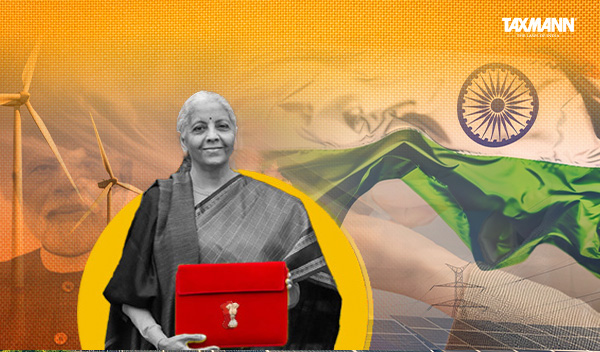
In the past decade, India’s approach to clean energy transition has been shaped by a simple but compelling logic to prioritize renewable energy capacity deployment at scale over resolution of systemic challenges, with the intent that increasing capacity will force their resolution with time. Solar parks and wind corridors became the primary indicators of India’s ambition for clean energy transition. At the same time, discussions on structural issues such as grid stability, industrial emissions, and intermittency management were largely deferred. Nevertheless, the Union Budget 2026 suggests that the Government is beginning to re-evaluate this approach. By explicitly elevating energy storage, Carbon Capture, Utilisation and Storage (“CCUS”), and allied emerging technologies, the Budget signals a pragmatic shift away from a narrow renewables deployment centric framework towards a more integrated and cohesive energy transition strategy.
This recalibration is significant because India’s energy challenges have evolved. The main concern is no longer the pace of clean power deployment alone. As renewable penetration increases, the focus has moved to system integration ensuring reliability, managing peak demand, and addressing emissions from energy-intensive industries. The Budget 2026 reflects a growing policy awareness that decarbonisation is not driven by brute technology, but by a coordinated ecosystem that must balance environmental objectives along with structured growth and development.
1. From Installed Capacity to System Performance
One of the most significant aspects in the Budget is promotion of energy storage as a strategic priority. Through customs duty exemptions for battery energy storage systems, the Government has implicitly acknowledged their central role to renewable capacity enhancement, which without storage are not ideally placed for ensuring system stability. This represents a departure from earlier Budgets, where storage was treated largely as a pilot intervention rather than essential infrastructure.
By reducing costs for grid-scale storage and associated supply chains, the Budget seeks to address a persistent mismatch between renewable generation patterns and electricity demand. However, this transition remains only partially realised. While fiscal incentives are meaningful, public investment in transmission expansion and grid modernisation has not kept pace with the scale of integration required. Without faster upgrades to grid infrastructure, storage risks remaining under-deployed, limiting its potential as a system-wide enabler.
2. CCUS Gains Policy Legitimacy
The significant development in Budget 2026 is the recognition of CCUS. Dedicated, multi-year funding has brought CCUS firmly into India’s mainstream climate policy discourse for the first time. This inclusion is not simply about technology adoption; it reflects a strategic reassessment of how India intends to decarbonise while continuing to industrialise.
India’s emissions profile is heavily influenced by sectors such as steel, cement, refining, and chemicals, where renewable substitution and electrification offer only partial solutions in the short to medium term. CCUS provides a pathway to mitigate emissions from these industries without dismantling productive capacity that supports employment, exports, and economic resilience. The inclusion of CCUS signals a more dynamic climate strategy, one that recognises the limits of a renewables-only transition for an industrialising economy. Further, this also aligns India more closely with global decarbonisation pathways.
That said, the gap between ambition and readiness remains wide. India lacks a comprehensive regulatory framework governing carbon storage, long-term liability, and monitoring. CCUS projects are capital-intensive and difficult to commercialise without strong market signals, such as carbon pricing or long-term offtake mechanisms. While the budget establishes policy intent, its success will depend on regulatory clarity and implementation at the administrative level.
Click Here To Read The Full Article
Disclaimer: The content/information published on the website is only for general information of the user and shall not be construed as legal advice. While the Taxmann has exercised reasonable efforts to ensure the veracity of information/content published, Taxmann shall be under no liability in any manner whatsoever for incorrect information, if any.

Taxmann Publications has a dedicated in-house Research & Editorial Team. This team consists of a team of Chartered Accountants, Company Secretaries, and Lawyers. This team works under the guidance and supervision of editor-in-chief Mr Rakesh Bhargava.
The Research and Editorial Team is responsible for developing reliable and accurate content for the readers. The team follows the six-sigma approach to achieve the benchmark of zero error in its publications and research platforms. The team ensures that the following publication guidelines are thoroughly followed while developing the content:
- The statutory material is obtained only from the authorized and reliable sources
- All the latest developments in the judicial and legislative fields are covered
- Prepare the analytical write-ups on current, controversial, and important issues to help the readers to understand the concept and its implications
- Every content published by Taxmann is complete, accurate and lucid
- All evidence-based statements are supported with proper reference to Section, Circular No., Notification No. or citations
- The golden rules of grammar, style and consistency are thoroughly followed
- Font and size that’s easy to read and remain consistent across all imprint and digital publications are applied
Everything on Tax and Corporate Laws of India
To subscribe to our weekly newsletter please log in/register on Taxmann.com








 CA | CS | CMA


