[Opinion] Probing the Pulse of the Company Under Company Law Investigations
- Blog|News|Company Law|
- 2 Min Read
- By Taxmann
- |
- Last Updated on 7 January, 2026
Latest from Taxmann


CS Neha Dangayach & Sumit Patel – [2026] 182 taxmann.com 45 (Article)
1. Introduction
The Companies Act, 2013 provides a comprehensive regulatory framework designed to ensure that companies in India operate with transparency, accountability, and proper corporate governance. To enforce these principles, the Act empowers various authorities- primarily the Registrar of Companies (ROC), the Ministry of Corporate Affairs (MCA), and the Serious Fraud Investigation Office (SFIO)-to review, examine, and scrutinise the affairs of companies. While inspection functions as a preliminary compliance-checking mechanism, investigation is a deeper examination initiated only when serious violations, mismanagement, or fraudulent practices are suspected. Together, these mechanisms help maintain discipline in corporate operations and protect the interests of shareholders, creditors, and the general public.
2. Inspections and Investigation under Companies Act, 2013
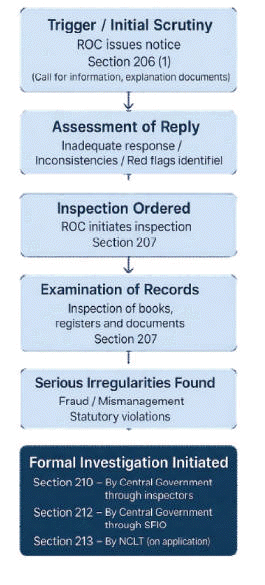
Under the Companies Act, 2013, the power to initiate and conduct inspection lies primarily with the ROC, whereas the power to order a formal investigation lies with the MCA, the National Company Law Tribunal (NCLT), or SFIO depending on the nature of the case. The process typically begins when the ROC issues a notice under Section 206(1) asking a company to furnish specific information, explanations, or documents. If the ROC finds the company’s response inadequate or inconsistent, or if the information supplied raises concerns of possible wrongdoing, the ROC may escalate the matter by ordering an inspection under Section 206(4). Once an inspection is initiated, ROC officers are empowered under Section 207 to examine books of account, statutory records, agreements, registers, and other documents that relate to the company’s affairs.
After completing the inspection, the ROC prepares a detailed report under Section 208 and submits it to the Central Government. If the report reveals significant irregularities- such as mismanagement, diversion of funds, non-disclosure of liabilities, fraudulent transactions, or violations of the Act- the MCA may order a full investigation. Such an investigation may be conducted under Section 210 by inspectors appointed by the Government, under Section 212 by the SFIO in cases of serious fraud, or under Section 213 by the NCLT upon application from shareholders or complainants. Thus, inspection often acts as the first step that triggers a full-scale investigation when deeper scrutiny is required.
3. Companies Covered Under These Powers
The powers of inspection and investigation apply broadly to all companies registered under the Companies Act, irrespective of their size, nature, or structure. This includes private companies, public companies (both listed and unlisted), One Person Companies, Section 8 not-for-profit entities, and subsidiaries of foreign companies operating in India. The Act does not provide any major exemption for any class of companies from being inspected or investigated. As long as an entity is incorporated under the Act, it remains subject to regulatory oversight.
Click Here To Read The Full Article
Disclaimer: The content/information published on the website is only for general information of the user and shall not be construed as legal advice. While the Taxmann has exercised reasonable efforts to ensure the veracity of information/content published, Taxmann shall be under no liability in any manner whatsoever for incorrect information, if any.

Taxmann Publications has a dedicated in-house Research & Editorial Team. This team consists of a team of Chartered Accountants, Company Secretaries, and Lawyers. This team works under the guidance and supervision of editor-in-chief Mr Rakesh Bhargava.
The Research and Editorial Team is responsible for developing reliable and accurate content for the readers. The team follows the six-sigma approach to achieve the benchmark of zero error in its publications and research platforms. The team ensures that the following publication guidelines are thoroughly followed while developing the content:
- The statutory material is obtained only from the authorized and reliable sources
- All the latest developments in the judicial and legislative fields are covered
- Prepare the analytical write-ups on current, controversial, and important issues to help the readers to understand the concept and its implications
- Every content published by Taxmann is complete, accurate and lucid
- All evidence-based statements are supported with proper reference to Section, Circular No., Notification No. or citations
- The golden rules of grammar, style and consistency are thoroughly followed
- Font and size that’s easy to read and remain consistent across all imprint and digital publications are applied
Everything on Tax and Corporate Laws of India
To subscribe to our weekly newsletter please log in/register on Taxmann.com








 CA | CS | CMA


