New GST Rates on Food Sector to Benefit Common Man and Middle Class
- Blog|News|GST & Customs|
- 2 Min Read
- By Taxmann
- |
- Last Updated on 10 September, 2025
Latest from Taxmann

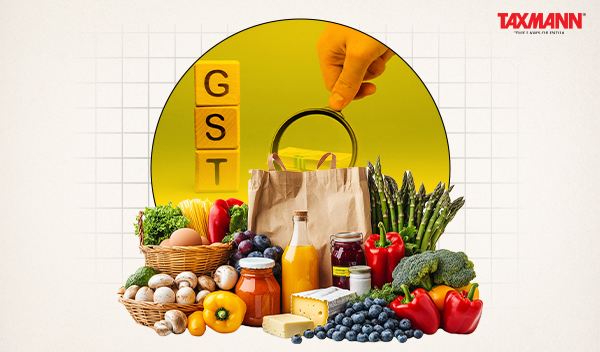
Press Release, Dated 08-09-2025
1. Introduction
The Government has issued a press release on revised GST rates for staple and processed food items, which will take effect from 22nd September 2025. These revisions are based on recommendations made during the 56th GST Council meeting held on 3rd September 2025. The changes are aimed at simplifying the GST rate structure, easing compliance, and stimulating growth in the food-processing and FMCG sectors.
2. Simplified GST Rate Structure
One of the most notable reforms is the reduction of GST slabs from four to two primary rates. While staple food items remain tax-free, most processed food products will now attract a 5% merit rate instead of higher slabs. The 18% standard rate will apply to other goods and services, with a 40% special rate reserved for sin and luxury items. This rationalisation seeks to create uniformity and simplify the overall tax regime.
3. Procedural and Structural Reforms
The measures also cover correction of inverted duty structures and uniform classification of similar goods, both of which have long been sources of litigation. Procedural reforms include simplified registration and return filing processes, as well as streamlined provisional refund mechanisms. These changes are expected to reduce the compliance burden for businesses and ensure smoother functioning of the GST framework.
4. Economic Impact and Sectoral Growth
The revised rates are projected to lower retail prices, which will in turn boost consumer demand for both staple and processed food products. The expected increase in demand is likely to encourage investment in the food-processing and FMCG industries. Additionally, these changes are anticipated to create new employment opportunities, support value addition, and expand post-harvest infrastructure. Farmers and processors stand to benefit from higher incomes and greater market access.
5. Conclusion
Overall, the revised GST rate structure represents a balanced approach to taxation in the food sector. By simplifying slabs, correcting anomalies, and introducing procedural reforms, the government aims to reduce litigation, ease compliance, and support long-term sectoral growth. The initiative not only promotes consumer welfare through lower prices but also strengthens investment, job creation, and rural income generation, contributing to holistic development of the food industry.
Click Here To Read The Full Press Release
Disclaimer: The content/information published on the website is only for general information of the user and shall not be construed as legal advice. While the Taxmann has exercised reasonable efforts to ensure the veracity of information/content published, Taxmann shall be under no liability in any manner whatsoever for incorrect information, if any.

Taxmann Publications has a dedicated in-house Research & Editorial Team. This team consists of a team of Chartered Accountants, Company Secretaries, and Lawyers. This team works under the guidance and supervision of editor-in-chief Mr Rakesh Bhargava.
The Research and Editorial Team is responsible for developing reliable and accurate content for the readers. The team follows the six-sigma approach to achieve the benchmark of zero error in its publications and research platforms. The team ensures that the following publication guidelines are thoroughly followed while developing the content:
- The statutory material is obtained only from the authorized and reliable sources
- All the latest developments in the judicial and legislative fields are covered
- Prepare the analytical write-ups on current, controversial, and important issues to help the readers to understand the concept and its implications
- Every content published by Taxmann is complete, accurate and lucid
- All evidence-based statements are supported with proper reference to Section, Circular No., Notification No. or citations
- The golden rules of grammar, style and consistency are thoroughly followed
- Font and size that’s easy to read and remain consistent across all imprint and digital publications are applied
Everything on Tax and Corporate Laws of India
To subscribe to our weekly newsletter please log in/register on Taxmann.com








 CA | CS | CMA


