India’s Hidden Wonders – Haunted | Holy | Historic
- Other Laws|Blog|
- 8 Min Read
- By Taxmann
- |
- Last Updated on 1 September, 2026
Latest from Taxmann

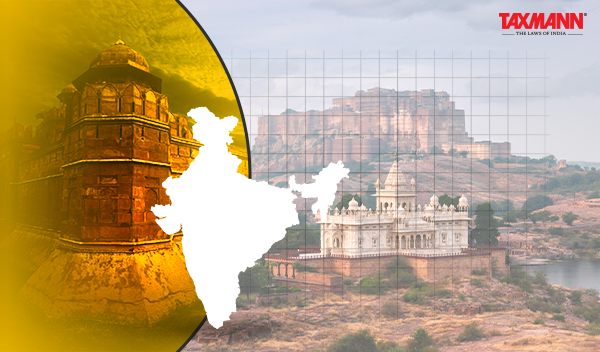
India is a land where legends breathe through its stones and whispers echo from ancient walls. From haunted forts and sunken temples to sacred caves and miracle lakes, every corner hides a story untold. These places blur the line between faith and folklore, leaving behind questions that history cannot fully answer. Journey through India’s hidden wonders—where the past still lives, and every shadow tells a tale.
Table of Contents
- The Fort Where Ashwatthama Comes Every Day to Worship Lord Shiva—Asirgarh Fort – Madhya Pradesh (Burhanpur)
- The Fort Where Sounds of Crying and Screaming are Heard—Shaniwar Wada Fort – Maharashtra (Pune)
- Fort of Snakes—Panhala Fort – Maharashtra (Kolhapur)
- The World’s Second Largest Wall—Kalavantin Fort – Maharashtra (Raigad)
Check out Taxmann's Unbelievable India which is a captivating compendium of India's marvels—spanning natural wonders, ancient engineering, living traditions, and enduring myths. From the origins of Hinduism and the Indus Valley to haunted forts, colour-changing lakes, and living root bridges, it blends folklore with history, geography, and science. Covering rituals, monuments, villages, monasteries, and grand events like the Maha Kumbh, it offers a balanced view of myth and evidence. Ideal for students, educators, travellers, and families, the book serves as an engaging atlas of India's most remarkable curiosities.
1. The Fort Where Ashwatthama Comes Every Day to Worship Lord Shiva—Asirgarh Fort – Madhya Pradesh (Burhanpur)
Asirgarh, located in the Burhanpur district of Madhya Pradesh, is home to the famous historic Asirgarh Fort. This fort is situated about 20 kilometers north of Burhanpur, atop the Satpura hills, at an elevation of 250 feet above sea level. It is counted among the world-renowned forts considered to be impregnable and unconquerable. Historians have referred to it as the “Bab-e-Dakkan” (Gateway to the South) and the “Kiladi-e-Dakkan” (Key to the South), because conquering this fort meant gaining access to the southern region and establishing dominance over the entire Khandesh area.
1.1 History of the Fort
The Asirgarh Fort was built in the 15th century by Asa Ahir. It is said that Mughal Emperor Jahangir once imprisoned his own son in this fort. The construction of the fort is attributed to Raja Asa Ahir, who was later killed by Nasir Khan of Khandesh. Nasir Khan’s descendant, Miran Bahadur Khan (1596–1600), declared his independence and refused to pay tribute to the Mughal Emperor Akbar and his son Daniyal. In 1599, Akbar marched towards Burhanpur and captured the city. He then laid siege to Asirgarh Fort and successfully took control of it on 17 January 1601. During the Second Anglo-Maratha War, on 18 October 1803, the British captured the Petta (lower fort area) of Asirgarh.
1.2 Architecture of Asirgarh Fort
The architecture of Asirgarh Fort was influenced by the Mughals, incorporating a blend of Islamic, Persian, Turkish, and Indian styles. There are three man-made ponds constructed to provide a water supply.
There is a temple here known as the Gupteshwar Mahadev Temple, which is dedicated to the Hindu deity Shiva.
Inside the fort, there is a ruined mosque with minarets known as the Asir Mosque. In addition to Hindu and Muslim architecture, some of the ruins are of British origin, and there are also British graves. After the departure of the British, this fort became deserted.

1.3 Gupteshwar Mahadev Temple
In ancient times, this place was also renowned as a gateway to South India. In the Gupteshwar Mahadev Temple of this fort, Ashwatthama worships and offers prayers to Lord Shiva every day. As evidence of this, rose flowers and vermilion can be seen in the temple every morning. It is believed that Ashwatthama bathes in the pond located near the temple and then worships Lord Shiva.
This temple is very old. However, upon reaching here, one experiences a special spiritual feeling. The path to reach this place is difficult. The temple is surrounded by a trench on all sides, and it is believed that Ashwatthama comes and goes to the temple through secret paths built within this trench.
1.4 Caves and Tunnels
Inside and around the fort, there are caves and tunnels that were built for the fort’s security. Through these tunnels, one can easily reach different parts of the fort, and they provided an opportunity to escape from enemy attacks.
1.5 Remarkable Ancient Structures
Within the Asirgarh Fort, you will see many ancient structures such as large temples, samadhis (memorials), and the main buildings of the fort. All these structures are prominent symbols of the lifestyle and art of that time and give you a glimpse into the Indian society of that era.
2. The Fort Where Sounds of Crying and Screaming are Heard—Shaniwar Wada Fort – Maharashtra (Pune)
Shaniwar Wada is located in Pune, Maharashtra, and was built by Bajirao Peshwa, who led the Maratha-Peshwa Empire to great heights. It was fully completed in the year 1732. The foundation of this palace was laid on a Saturday, which is why it was named ‘Shaniwar Wada’. This palace remained under the control of the Peshwas for about 85 years, but in 1818 AD, the British took control of it, and it remained under their authority until India’s independence.
2.1 The Cost of Building the Fort Was 16 Thousand
The Shaniwar Wada Palace, built near Abhinav Kala Mandir on Bajirao Road in the city, was the residence of the Peshwa rulers. The foundation of this palace was laid by Bajirao I on Saturday, 10th January 1730. At that time, the construction cost was 16,110 rupees. More than 1,000 people could live in this palace at the same time. On 22nd January 1732, a housewarming ceremony was performed in this palace according to Hindu rituals.
2.2 This Palace is Extremely Beautiful
Scenes from the Mahabharata and Ramayana eras are depicted on the walls of the palace. Every day, a special light and sound show is organized here from 7:15 PM to 8:10 PM, which attracts people from Pune and nearby areas. On the first floor of this palace, several artifacts and sculptures from the 17th–18th century have been preserved.
2.3 Five Gates in the Palace
There are a total of five gates in Shaniwar Wada. The first gate is called Delhi Gate, the second Mastani Gate, the third Khidki Gate, the fourth Narayan Gate, and the fifth Ganesh Gate. The most important parts of this palace are the Thorlya Diwan Khana, the Dancing Hall, and the Juna Arsa Mahal.
2.4 This Palace Was Destroyed by Fire
In the year 1828, a terrible fire broke out in this palace, which kept burning for seven days. Because of this, a large part of the palace was burned down, but the remaining structures have now been preserved as a tourist site.
2.5 Mysterious Stories of the Shaniwar Wada Fort
Compared to other forts in India, the mysterious story of the Shaniwar Wada Fort is extremely strange. According to local people, they say that on the night of the new moon (Amavasya), a painful echo is heard throughout the palace and its surrounding areas. The sound that is heard seems like a cry for help.
Another terrifying story is that, out of the greed for power, the Maratha Peshwa Narayan Rao was brutally murdered in this palace. After this murder, his spirit is said to wander in the fort, and even today, Narayan Rao’s screams can be heard in the fort at night. Another legend says that a prince was also mercilessly killed in this palace, after which the wandering voice of his spirit is always heard.
3. Fort of Snakes—Panhala Fort – Maharashtra (Kolhapur)
The Panhala Fort, also known as Panhalgad, Panala, or Pahala, is located 20 kilometers southeast of the Kolhapur district in the Indian state of Maharashtra. This fort is one of the oldest in India. It was constructed between 1178 and 1209 AD by the Shilahara ruler Bhoja II. This fort is extremely historic as it has been ruled by various dynasties, including the Yadavas, Adil Shahis, and Bahamani Sultans. Additionally, there’s a popular belief that Shivaji Maharaj also ruled this fort in 1673 AD. The fort is over 800 years old.
The Panhala Fort is called the ‘Fort of Snakes’ because of its winding and crooked structure, which makes it look like a moving snake. Near this fort, in Juna Rajwada, lies the Kuldevi Tulja Bhavani Temple, which has a secret tunnel. This tunnel opens directly into Panhala Fort, 22 kilometers away. Currently, this tunnel has been closed.
3.1 Architecture of the Panhala Fort
Panhala Fort is built at a height of 3,127 feet above sea level and is spread over 14 kilometers. It has been constructed using the Bijapur style of architecture, along with the design inspired by the form of a peacock. A tunnel has also been built beneath this fort.
Here you will find many ancient and beautiful sculptures. The special thing is that this fort is adorned with extremely beautiful sculptures, which include images of Hindu deities, Mahavir, and other Jain Tirthankaras.
3.2 Andhar Bawadi
In the Panhala Fort, there is an Andhar Bawadi, which is secretly built beneath a building. It is said that it was constructed by the Mughal ruler Adil Shah. He believed that if the fort were attacked, the enemies might poison the water. Therefore, Shah had a secret stepwell built beneath a three-storey building.
3.3 Why It is Called the ‘Fort of Snakes’
Panhala Fort is called the ‘Fort of Snakes’ because its structure is winding and curved, meaning it appears as if a snake is moving. Near this fort, in the Juna Rajwada, there is a temple of the family deity Tulja Bhavani, which has a secret tunnel that directly opens 22 kilometers away into the Panhala Fort. Currently, this tunnel has been closed. It is said that the great sage Parashar once lived in this tunnel. Not only that, the famous 18th-century poet Moropant composed his poems here.
3.4 Interesting Facts About Panhala Fort
- This fort is one of the largest and most popular forts of the Deccan, with a circumference spread over an area of approximately 14 kilometers and about 110 watch points built for vigilance.
- Due to the fortification of more than 7 kilometers, the area of the fort appears triangular in shape.
- Near this fort is located the Kalavantincha Mahal, also known as Nayakini Sajja, which literally means “the room of courtesans’ balcony.” This palace stands on the eastern side of the fort’s protective wall and had turned into ruins by the year 1886.
- There are 3 granaries in this fort, the first of which is the Amberkhana granary, which covers an area of 950 square meters and is 10.5 meters high, the second is the Dharma Kothi granary, which was approximately 55 feet long, 48 feet wide, and 35 feet high, and the third is the Sajja Kothi, which was built by Adil Shah in 1500 AD.
- Other major structures of this fort include Teen Darwaza, Wagh Darwaza, Rajdindi Burj, temples, and tombs.
4. The World’s Second Largest Wall—Kalavantin Fort – Maharashtra (Raigad)
Kalavantin Fort is a 2,250 feet (686 meters) high peak located in the Western Ghats, near Prabalgad Fort in the Raigad district of Maharashtra, India. It is also known by the names Kelwe Teen, Kalavantinicha Sulka, or Kalavantin Peak; alternative transliterations include Kalavantin, Kalavati, and Kalavanti. It is a popular trekking destination.
4.1 History of the Fort
The fort was built during the Bahmani Sultanate period to keep watch over the Panvel and Kalyan forts. However, in 1458 AD, after the defeat of the Ahmadnagar Sultanate, the fort was taken from them. It is said about Kalavantin Fort that many people who visited here have fallen and died. Earlier, the fort was known as Muranjan Fort, but during the reign of Chhatrapati Shivaji Maharaj, its name was changed. Shivaji Maharaj named this fort after Queen Kalavantin.
4.2 People Return Before Sunset
Located between Matheran and Panvel in Maharashtra, this fort is also known as Kalavantin Durg. It is said about this fort that due to the difficult path, very few people visit here, and those who do are advised to return before sunset. In fact, because of the steep climb, people do not stay here for long. Also, there are no facilities such as electricity or water available here. As evening falls, silence spreads for miles around.
4.3 Stairs Carved Out of Rock
To climb this fort, stairs have been carved out of the rocks. These stairs have neither ropes nor any railing. Even a slight mistake or a slip during the climb can cause a person to fall into the gorge below. Many people have died from falling off this fort. Because of the accidents that happen here, the locals also call it the ‘Fort of Death’. People believe that the souls of those who died here still wander around this place.
4.4 Name Changed During Shivaji’s Reign
The name of this fort was changed during the reign of Chhatrapati Shivaji Maharaj. Earlier, it was called Muranjan Fort. It is said that Shivaji named this fort after Queen Kalavantin.
4.5 Many Forts Visible from the Peak
From the Kalavantin Durg Fort, one can also see Chanderi, Matheran, Karnala, and Irshalgad Forts. Some parts of Mumbai city can also be seen from this fort. Climbing to this fort is possible from October to May. During the rainy season, the climb becomes extremely dangerous.
Disclaimer: The content/information published on the website is only for general information of the user and shall not be construed as legal advice. While the Taxmann has exercised reasonable efforts to ensure the veracity of information/content published, Taxmann shall be under no liability in any manner whatsoever for incorrect information, if any.

Taxmann Publications has a dedicated in-house Research & Editorial Team. This team consists of a team of Chartered Accountants, Company Secretaries, and Lawyers. This team works under the guidance and supervision of editor-in-chief Mr Rakesh Bhargava.
The Research and Editorial Team is responsible for developing reliable and accurate content for the readers. The team follows the six-sigma approach to achieve the benchmark of zero error in its publications and research platforms. The team ensures that the following publication guidelines are thoroughly followed while developing the content:
- The statutory material is obtained only from the authorized and reliable sources
- All the latest developments in the judicial and legislative fields are covered
- Prepare the analytical write-ups on current, controversial, and important issues to help the readers to understand the concept and its implications
- Every content published by Taxmann is complete, accurate and lucid
- All evidence-based statements are supported with proper reference to Section, Circular No., Notification No. or citations
- The golden rules of grammar, style and consistency are thoroughly followed
- Font and size that’s easy to read and remain consistent across all imprint and digital publications are applied
Everything on Tax and Corporate Laws of India
To subscribe to our weekly newsletter please log in/register on Taxmann.com








 CA | CS | CMA


