GSTAT Finds Profiteering in Instant Noodles | Deposit to CWF Ordered
- News|Blog|GST & Customs|
- 2 Min Read
- By Taxmann
- |
- Last Updated on 20 February, 2026
Latest from Taxmann

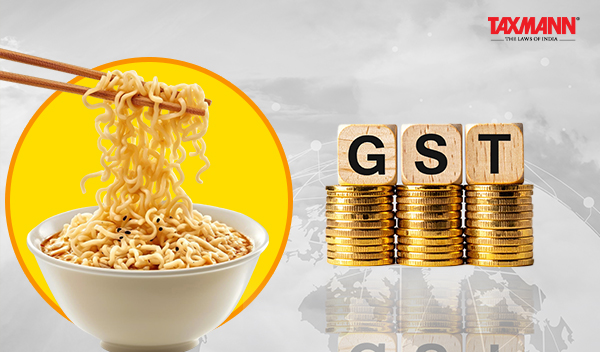
Case Details: DG Anti Profiteering, Director General of Anti-Profiteering, DGAP vs. C.G. Foods [2026] 183 taxmann.com 241 (GSTAT-NEW DELHI)
Judiciary and Counsel Details
- Anil Kumar Gupta, Technical Member
Facts of the Case
The Director General of Anti-Profiteering (DGAP) filed a complaint, alleging that the assessee had not passed on the GST rate reduction from 18% to 12% on instant noodles supplied. The DGAP report showed that the assessee had increased base prices for several SKUs after the rate cut, effectively denying customers the benefit. It also submitted documents showing higher costs for raw materials, packaging, fuel, and freight, but these mostly related to periods before the rate reduction and did not justify withholding the benefit. The matter was accordingly placed before the Goods and Services Tax Appellate Authority (GSTAT).
GSTAT Held
The GSTAT held that the assessee had contravened the provisions of Section 171(1) of the CGST Act and the Delhi GST Act by denying customers the benefit of tax reduction. The Authority observed that the DGAP report demonstrated that the assessee had profiteered. It held that increases in cost prior to the rate reduction did not excuse non-passing of the statutory benefit. Consequently, the Authority directed the assessee to deposit the profiteered amount in the Consumer Welfare Fund created by the Central and State Governments equally, confirming the applicability of Section 171 of the CGST Act and the Delhi GST Act.
List of Cases Referred to
- Reckitt Benckiser India (P.) Ltd. v. Union of India [2024] 158 taxmann.com 675/102 GST 495/82 GSTL 344 (Delhi) (para 3)
- CIT (Central)-I v. Vatika Township (P.) Ltd. [2014] 49 taxmann.com 249/227 Taxman 121/367 ITR 466 (SC) (para 17).
Disclaimer: The content/information published on the website is only for general information of the user and shall not be construed as legal advice. While the Taxmann has exercised reasonable efforts to ensure the veracity of information/content published, Taxmann shall be under no liability in any manner whatsoever for incorrect information, if any.

Taxmann Publications has a dedicated in-house Research & Editorial Team. This team consists of a team of Chartered Accountants, Company Secretaries, and Lawyers. This team works under the guidance and supervision of editor-in-chief Mr Rakesh Bhargava.
The Research and Editorial Team is responsible for developing reliable and accurate content for the readers. The team follows the six-sigma approach to achieve the benchmark of zero error in its publications and research platforms. The team ensures that the following publication guidelines are thoroughly followed while developing the content:
- The statutory material is obtained only from the authorized and reliable sources
- All the latest developments in the judicial and legislative fields are covered
- Prepare the analytical write-ups on current, controversial, and important issues to help the readers to understand the concept and its implications
- Every content published by Taxmann is complete, accurate and lucid
- All evidence-based statements are supported with proper reference to Section, Circular No., Notification No. or citations
- The golden rules of grammar, style and consistency are thoroughly followed
- Font and size that’s easy to read and remain consistent across all imprint and digital publications are applied
Everything on Tax and Corporate Laws of India
To subscribe to our weekly newsletter please log in/register on Taxmann.com








 CA | CS | CMA


