[Global IDT Insights] UAE Clarifies VAT Treatment for Barter Transactions
- Blog|News|GST & Customs|
- 2 Min Read
- By Taxmann
- |
- Last Updated on 7 May, 2025
Latest from Taxmann

Editorial Team – [2025] 174 taxmann.com 205 (Article)
Global IDT Insights provides a weekly snippet of tax news specifically related to Indirect Taxes from around the globe.
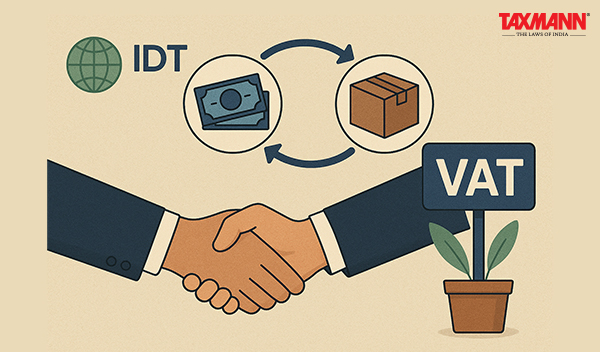
1. UAE Clarifies VAT Treatment for Barter Transactions
The Federal Tax Authority (FTA) of the United Arab Emirates has issued Public Clarification, to provide comprehensive guidance on the VAT implications of barter transactions.
While VAT on monetary transactions is well established, this clarification addresses the complexities involved in valuing and taxing non-monetary exchanges.
A barter transaction, by definition, involves the exchange of goods or services between parties without full monetary consideration. Each party supplies something of value to the other.
For UAE VAT purposes, such transactions are treated similarly to conventional taxable supplies. However, special rules apply for determining the value of supply.
The value of a supply in a barter transaction is established based on the market value of the consideration received, excluding the VAT amount. When both monetary and non-monetary components are involved, the value is calculated as the sum of the monetary consideration and the market value of the non-monetary component, again excluding VAT.
To determine the market value of non-monetary consideration, the FTA prescribes a three-tiered approach:
- The fair market value achieved under similar circumstances in a transaction between unrelated parties.
- If unavailable, the value of a similar supply made under comparable conditions.
- If neither of the above is feasible, the replacement cost of similar goods or services provided by an unrelated supplier.
The clarification further emphasises the importance of proper documentation. Registrants involved in barter transactions must issue tax invoices to each other for the respective supplies, even when no cash is exchanged.
This clarification is effective from the implementation date of the relevant legislation unless otherwise specified.
Source: Official News
Click Here To Read The Full Article
Disclaimer: The content/information published on the website is only for general information of the user and shall not be construed as legal advice. While the Taxmann has exercised reasonable efforts to ensure the veracity of information/content published, Taxmann shall be under no liability in any manner whatsoever for incorrect information, if any.

Taxmann Publications has a dedicated in-house Research & Editorial Team. This team consists of a team of Chartered Accountants, Company Secretaries, and Lawyers. This team works under the guidance and supervision of editor-in-chief Mr Rakesh Bhargava.
The Research and Editorial Team is responsible for developing reliable and accurate content for the readers. The team follows the six-sigma approach to achieve the benchmark of zero error in its publications and research platforms. The team ensures that the following publication guidelines are thoroughly followed while developing the content:
- The statutory material is obtained only from the authorized and reliable sources
- All the latest developments in the judicial and legislative fields are covered
- Prepare the analytical write-ups on current, controversial, and important issues to help the readers to understand the concept and its implications
- Every content published by Taxmann is complete, accurate and lucid
- All evidence-based statements are supported with proper reference to Section, Circular No., Notification No. or citations
- The golden rules of grammar, style and consistency are thoroughly followed
- Font and size that’s easy to read and remain consistent across all imprint and digital publications are applied
Everything on Tax and Corporate Laws of India
To subscribe to our weekly newsletter please log in/register on Taxmann.com








 CA | CS | CMA


