EU–US Finalize Tariff Deal Covering Key Sectors
- Blog|News|GST & Customs|
- 2 Min Read
- By Taxmann
- |
- Last Updated on 6 August, 2025
Latest from Taxmann

Editorial Team – [2025] 177 taxmann.com 120 (Article)
Introduction: A Landmark Trade Agreement
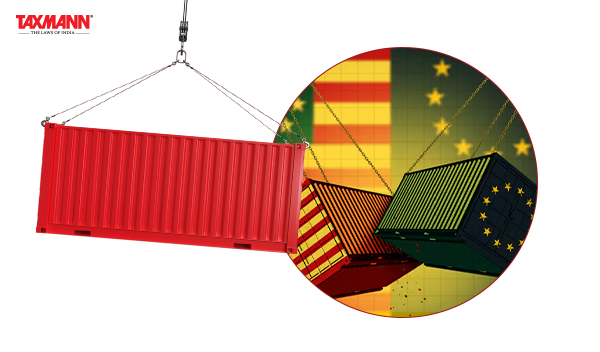
The European Union and the United States have finalized a significant trade agreement aimed at streamlining tariffs and fostering stronger economic ties. This pact introduces a revised tariff framework that will have implications across several critical sectors of transatlantic trade. The agreement marks a shift toward greater predictability and fairness in the trading environment, helping businesses better navigate cross-border operations. By standardizing tariff rates and providing sector-specific relief, the deal is expected to stimulate bilateral trade and enhance supply chain resilience.
Standardized 15% Tariff Rate Across Key Sectors
At the core of the agreement is the introduction of a uniform 15% tariff rate on a broad range of EU exports to the United States. This flat rate replaces the previous system of varying or combined tariffs, which often created complexity and uncertainty for exporters. The new rate applies to major economic sectors, including automobiles, semiconductors, and pharmaceuticals—industries that are central to both economies. The adoption of a ceiling rate simplifies compliance, improves transparency, and is likely to reduce administrative burdens for companies engaged in transatlantic trade.
Zero-for-Zero Tariff Arrangement for Strategic Goods
A key feature of the agreement is the establishment of a zero-for-zero tariff framework for a specified list of strategic goods. Under this arrangement, no tariffs will be imposed on select high-value and critical products such as aircraft and aircraft parts, certain industrial chemicals, generic pharmaceuticals, semiconductor manufacturing equipment, and specific categories of agricultural products. It also covers important natural resources and critical raw materials. This measure aims to boost cooperation in essential industries, reduce costs for manufacturers, and secure vital supply chains in both regions.
Path Forward: Flexibility and Future Cooperation
The trade agreement not only provides immediate tariff relief but also lays the groundwork for continued negotiation and policy alignment. Both the EU and the US have signaled their willingness to expand the zero-tariff list as new strategic sectors emerge or mutual interests evolve. Furthermore, the agreement includes a commitment to enhanced dialogue on customs procedures, trade facilitation, and regulatory cooperation. This forward-looking approach ensures the agreement remains dynamic, adaptable, and responsive to the needs of both parties in a rapidly changing global trade landscape.
Click Here To Read The Full Article
Disclaimer: The content/information published on the website is only for general information of the user and shall not be construed as legal advice. While the Taxmann has exercised reasonable efforts to ensure the veracity of information/content published, Taxmann shall be under no liability in any manner whatsoever for incorrect information, if any.

Taxmann Publications has a dedicated in-house Research & Editorial Team. This team consists of a team of Chartered Accountants, Company Secretaries, and Lawyers. This team works under the guidance and supervision of editor-in-chief Mr Rakesh Bhargava.
The Research and Editorial Team is responsible for developing reliable and accurate content for the readers. The team follows the six-sigma approach to achieve the benchmark of zero error in its publications and research platforms. The team ensures that the following publication guidelines are thoroughly followed while developing the content:
- The statutory material is obtained only from the authorized and reliable sources
- All the latest developments in the judicial and legislative fields are covered
- Prepare the analytical write-ups on current, controversial, and important issues to help the readers to understand the concept and its implications
- Every content published by Taxmann is complete, accurate and lucid
- All evidence-based statements are supported with proper reference to Section, Circular No., Notification No. or citations
- The golden rules of grammar, style and consistency are thoroughly followed
- Font and size that’s easy to read and remain consistent across all imprint and digital publications are applied
Everything on Tax and Corporate Laws of India
To subscribe to our weekly newsletter please log in/register on Taxmann.com








 CA | CS | CMA


