Bail to Be Granted in GST Fraud Case Where Continued Detention Would Serve No Useful Purpose Due to Delayed Trial | HC
- Blog|News|GST & Customs|
- < 1 minute
- By Taxmann
- |
- Last Updated on 14 April, 2025
Latest from Taxmann

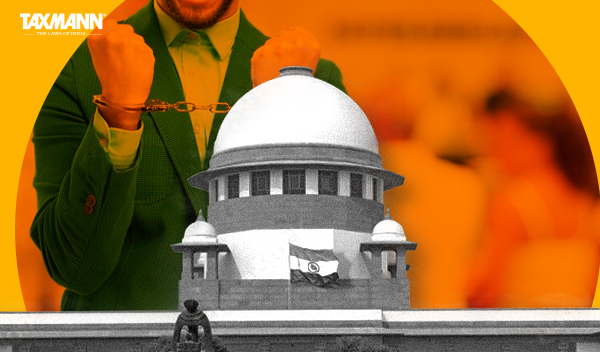
Case Details: Vikrant Singhal vs. Union of India - [2025] 173 taxmann.com 200 (Allahabad)
Judiciary and Counsel Details
- Manoj Bajaj, J.
-
Shad Khan, Shishir Prakash for the Petitioner.
-
Parv Agarwal for the Respondent.
Facts of the Case
The petitioner sought regular bail in a GST fraud case under Sections 132 of the CGST Act, 2017. He was accused of issuing fake invoices without actual supply of goods, thereby availing and passing on fraudulent ITC through two companies. The total alleged fraud across 143 fake firms was ?885 crores. The petitioner had confessed during investigation, and digital evidence was recovered. He had been in custody, with the trial yet to begin.
High Court Held
The Hon’ble High Court held that while economic offences require a distinct approach, courts must consider the nature of accusations, evidence, and potential punishment. Since the case was based on documentary evidence, official witnesses, and the trial was indefinitely delayed, continued detention would serve no useful purpose. Bail was granted subject to requisite bonds and trial court conditions.
List of Cases Reviewed
- Sanjay Chandra v. CBI (2012) 1 SCC 40 – (para 14) followed
List of Cases Referred to
- Sanjay Chandra v. CBI (2012) 1 SCC 40 (para 14).
Disclaimer: The content/information published on the website is only for general information of the user and shall not be construed as legal advice. While the Taxmann has exercised reasonable efforts to ensure the veracity of information/content published, Taxmann shall be under no liability in any manner whatsoever for incorrect information, if any.

Taxmann Publications has a dedicated in-house Research & Editorial Team. This team consists of a team of Chartered Accountants, Company Secretaries, and Lawyers. This team works under the guidance and supervision of editor-in-chief Mr Rakesh Bhargava.
The Research and Editorial Team is responsible for developing reliable and accurate content for the readers. The team follows the six-sigma approach to achieve the benchmark of zero error in its publications and research platforms. The team ensures that the following publication guidelines are thoroughly followed while developing the content:
- The statutory material is obtained only from the authorized and reliable sources
- All the latest developments in the judicial and legislative fields are covered
- Prepare the analytical write-ups on current, controversial, and important issues to help the readers to understand the concept and its implications
- Every content published by Taxmann is complete, accurate and lucid
- All evidence-based statements are supported with proper reference to Section, Circular No., Notification No. or citations
- The golden rules of grammar, style and consistency are thoroughly followed
- Font and size that’s easy to read and remain consistent across all imprint and digital publications are applied
Everything on Tax and Corporate Laws of India
To subscribe to our weekly newsletter please log in/register on Taxmann.com








 CA | CS | CMA


