How to Use Bare Acts for AIBE 2026 – Tips | Strategies | Resources
- Exam|
- 5 Min Read
- By Taxmann
- |
- Last Updated on 25 February, 2026
Latest from Taxmann

The All India Bar Examination (AIBE) is conducted by the Bar Council of India (BCI) to grant the Certificate of Practice (COP), which is mandatory for advocates to practice law in Indian courts. Since the AIBE (21) 2026 is a closed-book exam where only Bare Acts without notes or commentary are permitted, mastering these Acts is crucial. Bare Acts provide the authentic, unembellished text of the law, helping aspirants understand the exact wording, intent, and application of legal provisions.
Table of Contents
- Why Bare Acts Matter in AIBE 2026
- How to Study Bare Acts Effectively for AIBE
- Updated Laws You Must Know (BNS, BNSS, BSA)
- Where to Access Reliable Bare Acts & Resources
- Conclusion – Using Bare Acts Smartly in AIBE
For AIBE candidates, effective use of Bare Acts is not just about clearing the exam—it is also about building precision, speed, and confidence in legal interpretation. This article shares practical tips, strategies, and resources to help you use Bare Acts effectively for AIBE 2026 and beyond.
1. Why Bare Acts Matter in AIBE 2026
Bare Acts form the backbone of preparation for the All India Bar Examination (AIBE) 2026. They are the official texts of laws passed by the Parliament and State legislatures, containing the exact words of the statute along with amendments. For aspirants, Bare Acts are not just exam material—they are the foundation of legal practice itself.
Unlike previous editions, AIBE is no longer an open-book exam, but candidates are still allowed to carry Bare Acts without any notes or commentary. This makes it essential to be familiar with the structure, sections, and frequently tested provisions so that you can quickly navigate them during the exam.
Here’s why Bare Acts matter so much in AIBE 2026:
- Direct Source of Questions – Most AIBE questions are framed directly from Bare Acts. Understanding the exact wording of sections gives you an edge.
- Precision & Accuracy – Since AIBE tests your ability to apply the law as written, Bare Acts help ensure that your answers are legally sound and error-free.
- Time-Saving in Exam Hall – Knowing how to locate key provisions quickly can save precious minutes and improve your chances of completing all 100 questions.
- Updated Legal Framework – With the introduction of the new criminal codes—Bharatiya Nyaya Sanhita (BNS), Bharatiya Nagarik Suraksha Sanhita (BNSS), and Bharatiya Sakshya Adhiniyam (BSA)—using updated Bare Acts is critical to avoid relying on repealed provisions.
- Foundation for Legal Career – Beyond AIBE, Bare Acts remain a lawyer’s primary reference tool. Developing the habit of working directly with statutes builds confidence and long-term legal acumen.
2. How to Study Bare Acts Effectively for AIBE
Once you understand why Bare Acts are central to AIBE 2026, the next step is to develop the right strategy to study them effectively. Since the exam allows Bare Acts without notes or commentary, mastering their structure and language is the key to success.
Here’s a step-by-step approach to studying Bare Acts for AIBE 2026:
- Understand the Structure – Every Bare Act follows a logical order—preamble, chapters, sections, and schedules. Start by scanning the index page of each Act and noting how provisions are arranged. Familiarity with the layout helps you locate answers quickly in the exam hall.
- Focus on Key Sections – Not every provision carries equal weight. Prioritise high-yield areas that frequently appear in past AIBE papers—like Fundamental Rights (Constitution), Bail & Arrest (BNSS), Relevancy of Facts (BSA), and Contract essentials. Create a list of “must-know” sections for each subject.
- Practice Interpretation – Merely reading isn’t enough—spend time on the meaning behind the statute. Break down complex language into simple terms, and try to explain sections in your own words. Link provisions to real-life scenarios or landmark cases to understand how they apply in practice.
- Make Concise Notes – While you can’t carry annotated notes into the exam hall, you can prepare brief summaries, tables, or mnemonics during study sessions. For example, use flowcharts to remember trial stages under BNSS or acronyms for fundamental rights under the Constitution.
- Revise Regularly – Bare Acts are dense and easy to forget if left untouched. Plan weekly revision cycles where you quickly review important sections, definitions, and illustrations. In the final month, aim for daily short revisions to keep everything fresh.
- Practice with PYQs & Mock Tests – The most effective way to study Bare Acts is to use them while solving previous year AIBE papers. This builds exam-day speed and accuracy. Mock tests with Bare Acts in hand also simulate real conditions and train you to locate sections under time pressure.
3. Updated Laws You Must Know (BNS, BNSS, BSA)
The AIBE 2026 syllabus has introduced one of the most significant changes in recent years—the replacement of India’s century-old criminal laws with three brand-new codes. Every candidate must be familiar with these laws, as they now form the core of the AIBE exam:
- Bharatiya Nyaya Sanhita, 2023 (BNS) → Replaces the Indian Penal Code (IPC), 1860
- Bharatiya Nagarik Suraksha Sanhita, 2023 (BNSS) → Replaces the Code of Criminal Procedure (CrPC), 1973
- Bharatiya Sakshya Adhiniyam, 2023 (BSA) → Replaces the Indian Evidence Act, 1872
3.1 Why These Updates Matter for AIBE 2026
- These three codes are entirely new laws, not just minor amendments. Sections have been restructured, renumbered, and in some cases, provisions have been added or omitted.
- Since AIBE questions are framed directly from Bare Acts, relying on outdated IPC, CrPC, or Evidence Act texts can cost you marks.
- The Bar Council of India (BCI) has officially included BNS, BNSS, and BSA in the AIBE XXI (21) syllabus, so updated Bare Acts are non-negotiable study material.
3.2 Key Focus Areas in the New Codes
- BNS (Criminal Substantive Law) – Offences against the body, property, and State; joint liability; abetment and conspiracy; new provisions on terrorism and organised crime.
- BNSS (Criminal Procedure) – Powers of police, arrest and bail procedures, trial stages, timelines for investigation, digital evidence procedures.
- BSA (Law of Evidence) – Relevancy of facts, burden of proof, admissibility of electronic evidence, confessions, and examination of witnesses.
4. Where to Access Reliable Bare Acts & Resources
One of the biggest challenges AIBE aspirants face is choosing the right Bare Acts. With so many free PDFs, outdated prints, and commentary-based editions available, it’s easy to get lost or rely on the wrong version. Since AIBE allows only Bare Acts without notes or commentary, candidates must ensure they are using authentic, updated, and exam-compliant editions.
4.1 Common Sources for Bare Acts
- Government Websites – Free PDFs are often available, but they may not always be updated with the latest amendments.
- Local Bookstores & Coaching Institutes – These may provide compilations, but many editions include commentaries or explanatory notes—which are not allowed in the exam hall.
- Online Legal Platforms – Some websites host Bare Acts, but reliability varies and cross-verifying amendments can be time-consuming. For Example: Taxmann.com | Research, CentaxOnline
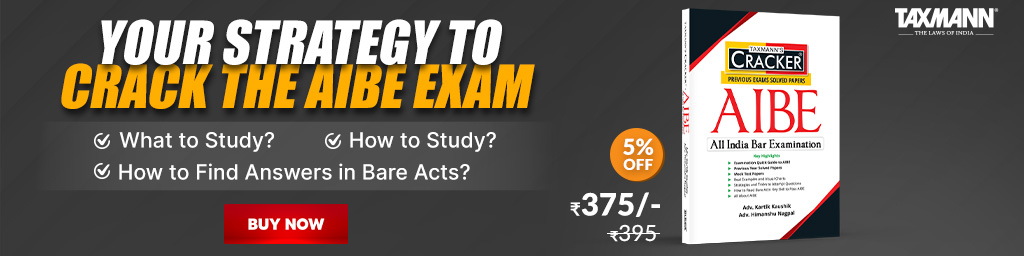
4.2 Why Choose Taxmann’s Bare Acts for AIBE 2026
When it comes to AIBE preparation, Taxmann’s Bare Acts are purpose-built for the exam:
- 100% Updated & Amended – Every edition is aligned with the latest criminal law reforms (BNS, BNSS, BSA) and other amendments.
- Exam-Compliant Format – Pure Bare Acts without any commentary or explanations—exactly what’s permitted in the exam hall.
- Cost-Effective – Affordable pricing ensures students don’t overspend while preparing for multiple subjects.
- Trusted Legacy – With decades of expertise in legal publishing, Taxmann is a reliable name for authentic, error-free editions.
- Convenience – All 19 subjects for AIBE are available in one place, saving you time and effort in sourcing individual Acts.
5. Conclusion – Using Bare Acts Smartly in AIBE
Success in AIBE (21) 2026 depends on how effectively you use Bare Acts, as only unannotated editions are allowed in the exam hall. Mastering their structure, focusing on key sections, and staying updated with the new BNS, BNSS, and BSA is essential.
To avoid confusion from outdated or commentary-based texts, rely on Taxmann’s updated and exam-compliant Bare Acts—a cost-effective and trusted choice. The right preparation now will not only help you clear AIBE in one attempt but also strengthen your foundation for a successful legal career.
Disclaimer: The content/information published on the website is only for general information of the user and shall not be construed as legal advice. While the Taxmann has exercised reasonable efforts to ensure the veracity of information/content published, Taxmann shall be under no liability in any manner whatsoever for incorrect information, if any.

Taxmann Publications has a dedicated in-house Research & Editorial Team. This team consists of a team of Chartered Accountants, Company Secretaries, and Lawyers. This team works under the guidance and supervision of editor-in-chief Mr Rakesh Bhargava.
The Research and Editorial Team is responsible for developing reliable and accurate content for the readers. The team follows the six-sigma approach to achieve the benchmark of zero error in its publications and research platforms. The team ensures that the following publication guidelines are thoroughly followed while developing the content:
- The statutory material is obtained only from the authorized and reliable sources
- All the latest developments in the judicial and legislative fields are covered
- Prepare the analytical write-ups on current, controversial, and important issues to help the readers to understand the concept and its implications
- Every content published by Taxmann is complete, accurate and lucid
- All evidence-based statements are supported with proper reference to Section, Circular No., Notification No. or citations
- The golden rules of grammar, style and consistency are thoroughly followed
- Font and size that’s easy to read and remain consistent across all imprint and digital publications are applied
Everything on Tax and Corporate Laws of India
To subscribe to our weekly newsletter please log in/register on Taxmann.com









 CA | CS | CMA


