[Opinion] Petpooja POS Controversy | Tax & Compliance Issues
- Blog|News|Income Tax|
- 2 Min Read
- By Taxmann
- |
- Last Updated on 17 March, 2026
Latest from Taxmann

CA Milind Wadhwani – [2026] 184 taxmann.com 289 (Article)
1. Introduction
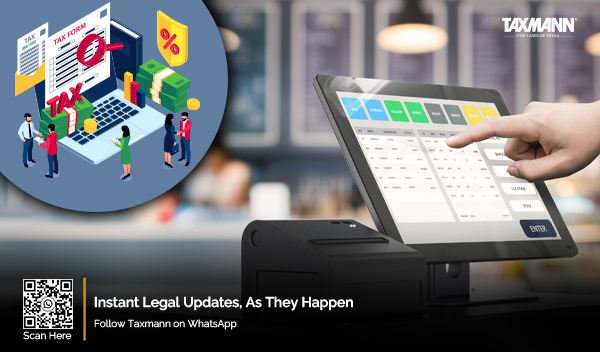
The increasing digitisation of business transactions has transformed tax administration across jurisdictions. In India, the widespread use of cloud-based Point-of-Sale (POS) systems by restaurants and retail establishments has created extensive digital trails that can be analysed by tax authorities for compliance verification.
In late 2025, tax authorities initiated investigations into several restaurant chains after observing significant discrepancies between turnover reported in Income-tax returns and the apparent scale of operations reflected in transaction data. The investigation reportedly traced these inconsistencies to certain POS software platforms widely used in the restaurant industry.
2. Detection of Possible Suppression of Turnover
The investigation was reportedly triggered during routine verification exercises when tax officials observed that restaurants with heavy customer traffic had reported relatively modest turnover in their Income-tax filings.
Subsequent analysis of digital transaction data allegedly revealed inconsistencies between:
(i) POS transaction logs
(ii) Declared turnover in Income-tax returns
(iii) GST outward supply disclosures
Under the Income-tax Act, suppression of turnover directly affects the computation of profits under the head “Profits and Gains of Business or Profession.” Unreported sales increase taxable income and, where deliberate suppression is established, may attract penalty consequences.
3. Alleged Mechanisms of Revenue Suppression
According to preliminary reports, authorities have identified several practices that could potentially lead to under-reporting of business income.
(a) Deletion and Modification of Cash Transactions
Authorities allege that certain establishments used backend features in POS systems to delete or modify billing records. In some instances, bulk deletions covering multiple days of transactions were reportedly carried out prior to the filing of GST and Income-tax returns.
(b) Dual Accounting Systems
Another allegation relates to the maintenance of parallel datasets within POS systems. The Authorities claim that:
i) One dataset recorded the actual sales generated at the point of service, while
ii) A second dataset reflected modified figures used for official accounting and tax reporting.
Such parallel records could potentially facilitate systematic under-reporting of taxable turnover.
(c) Cloud-Based Data Access
In a significant technological development, tax authorities reportedly accessed transaction logs stored in cloud servers maintained by POS service providers. This enabled them to correlate:
(i) GST registration numbers
(ii) PAN details of restaurant operators
(iii) Real-time billing data stored on cloud servers.
This cross-verification exercise allowed authorities to compare recorded POS transactions with figures reported in GST returns and Income-tax filings.
(d) Data Analytics and AI-Based Detection
The investigation reportedly relied heavily on AI-driven analytics tools. These systems analysed large volumes of billing data and flagged inconsistencies between:
(i) POS transaction logs
(ii) GST outward supply declarations
(iii) Income-tax return disclosures.
Such data-driven enforcement represents a growing trend in modern tax administration.
Click Here To Read The Full Article
Disclaimer: The content/information published on the website is only for general information of the user and shall not be construed as legal advice. While the Taxmann has exercised reasonable efforts to ensure the veracity of information/content published, Taxmann shall be under no liability in any manner whatsoever for incorrect information, if any.

Taxmann Publications has a dedicated in-house Research & Editorial Team. This team consists of a team of Chartered Accountants, Company Secretaries, and Lawyers. This team works under the guidance and supervision of editor-in-chief Mr Rakesh Bhargava.
The Research and Editorial Team is responsible for developing reliable and accurate content for the readers. The team follows the six-sigma approach to achieve the benchmark of zero error in its publications and research platforms. The team ensures that the following publication guidelines are thoroughly followed while developing the content:
- The statutory material is obtained only from the authorized and reliable sources
- All the latest developments in the judicial and legislative fields are covered
- Prepare the analytical write-ups on current, controversial, and important issues to help the readers to understand the concept and its implications
- Every content published by Taxmann is complete, accurate and lucid
- All evidence-based statements are supported with proper reference to Section, Circular No., Notification No. or citations
- The golden rules of grammar, style and consistency are thoroughly followed
- Font and size that’s easy to read and remain consistent across all imprint and digital publications are applied
Everything on Tax and Corporate Laws of India
To subscribe to our weekly newsletter please log in/register on Taxmann.com








 CA | CS | CMA


